Button
Quick Definition
The button (also called the dealer button) is a circular marker that designates the nominal dealer position at the table, giving that player the best strategic seat with last action on every post-flop betting round.
What Is Button?
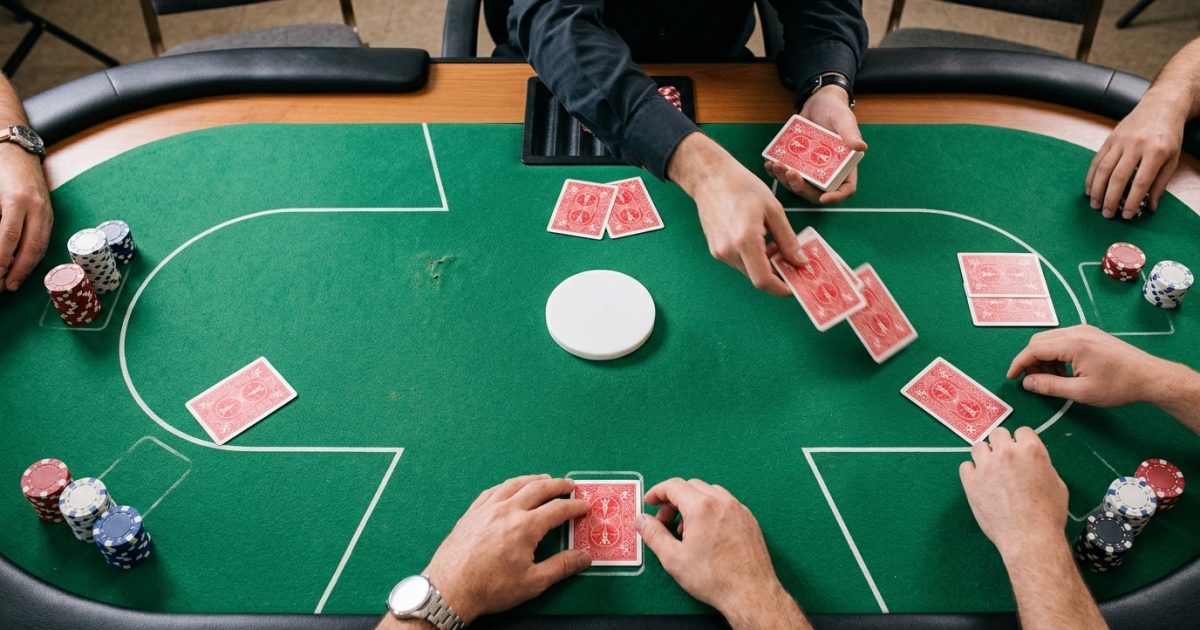
The button is both a physical object and a positional concept in poker. In casino and online poker, a professional dealer handles the cards, but a white disc labeled “DEALER” or “D” rotates around the table to indicate which player would be dealing in a home game. This marker determines the order of all action: blinds are posted by the two players to the button’s left, cards are dealt starting with the player left of the button, and post-flop betting begins to the button’s left as well.
The result is that the button player acts last on the flop, turn, and river. This is the most powerful position in poker. Acting last means you see every other player’s action before making your own decision. You know who checked, who bet, who raised, and who folded before you commit a single chip. This informational advantage compounds across every street of every hand.
Winning players understand that the button is where the majority of their profit is generated. It is not uncommon for a skilled player’s entire edge at a table to come from their button play. When you sit on the button, you should be playing more hands, stealing more blinds, and controlling more pots than from any other position.
How It Works
After each hand, the button moves one seat clockwise. This ensures that every player takes a turn in every position over the course of an orbit (one full rotation around the table). The rotation creates fairness — everyone benefits equally from the button’s advantage and suffers equally from the disadvantages of the blinds.
Preflop action order: The button acts second-to-last preflop, before the blinds. This is because the blinds have forced money in the pot and get to act after hearing from the rest of the table.
Post-flop action order: The button acts last on every subsequent street. The small blind acts first, the big blind second, and action proceeds clockwise until it reaches the button.
Button play strategy centers on wide opening ranges and aggressive stealing. When the action folds to you on the button, you are in an ideal spot to raise with a wide variety of hands because:
- Only two players remain (the blinds), so fewer hands can beat you.
- You will have positional advantage for the entire hand.
- The blinds are playing forced money and are often reluctant to defend.
A standard button opening range in a cash game might include 40-50% of all hands when the action folds to you.
Example
You are sitting on the button at a $1/$2 No-Limit Hold’em game. Everyone folds to you, and you look down at Nine-Seven suited. From under the gun, this is a clear fold. From the button with only the blinds to act, this becomes a profitable raise.
You raise to $6. The small blind folds, and the big blind calls with $4 already invested (so calling only $4 more). The pot is $13.
The flop comes Ten-Six-Three rainbow. The big blind checks. Because you are on the button, you have seen your opponent check before deciding your action. This information tells you they likely did not connect strongly with this board. You bet $8 as a continuation bet, and the big blind folds. You win the pot with nine-high.
Without the button, this sequence is far less profitable. If you were in the blinds and the button bet into you, you would be the one checking and facing pressure rather than applying it.
Common Mistakes
- Not stealing enough from the button. When the action folds to you, the button is a prime stealing opportunity. Many players only raise with strong hands from this seat, missing countless profitable steal attempts. The math strongly favors wide button opens against typical blind defense frequencies.
- Playing passively from the button. Having the button and limping (calling the big blind instead of raising) wastes your positional advantage. Raising takes initiative, builds the pot when you want it, and puts pressure on the blinds. Reserve limping for specific strategic situations, not as a default.
- Ignoring the button’s value in hand selection. Position should heavily influence which hands you play. A hand like King-Five suited is unprofitable from early position but can be a standard open-raise from the button. Use position-adjusted hand charts available in our guides section to calibrate your ranges.
Related Terms
- Position — the broader concept of seating advantage that the button exemplifies
- Blinds — the forced bets posted by the two players to the button’s left
- Preflop — the round where the button acts second-to-last
- Flop — the first post-flop street where the button’s positional advantage kicks in
- Ante — additional forced bets that make button steals even more valuable
FAQ
What happens if the button player is absent or sits out?
In live poker, if a player misses their turn on the button, the button still moves to their seat and then advances normally. The absent player does not post blinds from the button position (blinds are posted by the two seats after the button). In online poker, the button moves automatically and the absent player’s hand is folded.
What is a “button straddle”?
A button straddle is a voluntary blind bet made by the button player, typically double the big blind, which buys the button player last action preflop in addition to their natural last action post-flop. This is allowed in some live card rooms and creates larger pots. Not all poker rooms permit button straddles, so check the house rules before attempting one.
How does heads-up button play differ?
In heads-up poker (two players), the button is also the small blind and acts first preflop but last post-flop. This creates a unique dynamic where the button posts the smaller forced bet and has positional advantage on all subsequent streets. Heads-up button strategy involves opening nearly every hand and applying relentless pressure, since you have position for the duration of the hand. For more on heads-up play, explore our strategy guides.